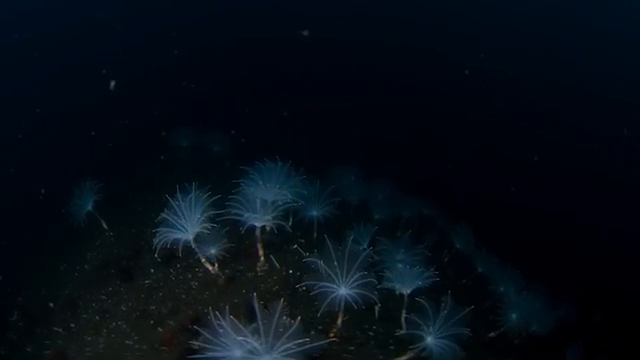
Mariana Trench: Secrets of Earth’s Deepest Abyss | Documentary for Sleep


Channel: Silence of the Earth
Uploaded by Silence of the Earth on 20251115
Categories: Education
Tags: mariana trench, mariana trench documentary, mariana trench explained, mariana trench deep sea, deep sea documentary, deep ocean documentary, deep ocean for sleep, ocean documentary for sleep, documentary for sleep, calm documentary, relaxing documentary, sleep documentary, fall asleep to science, fall asleep to documentaries, ocean sounds for sleep, deep sea creatures, David Attenborough, full documentary
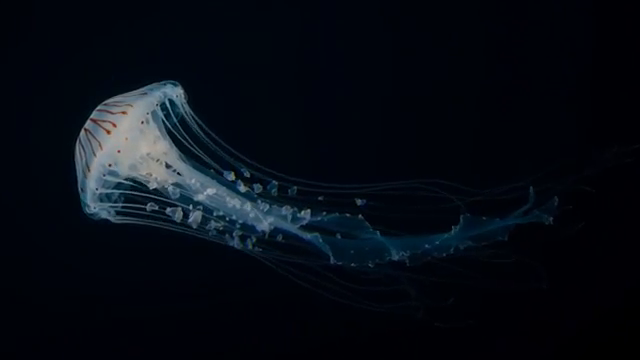
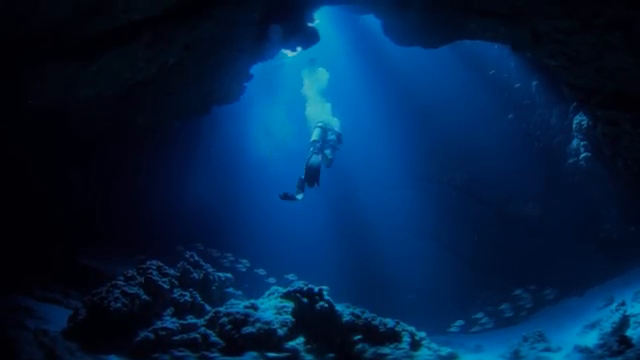
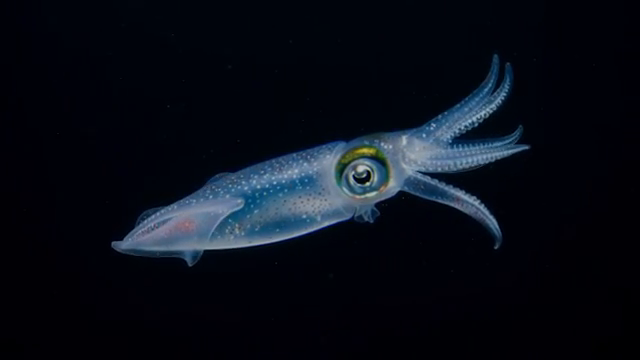
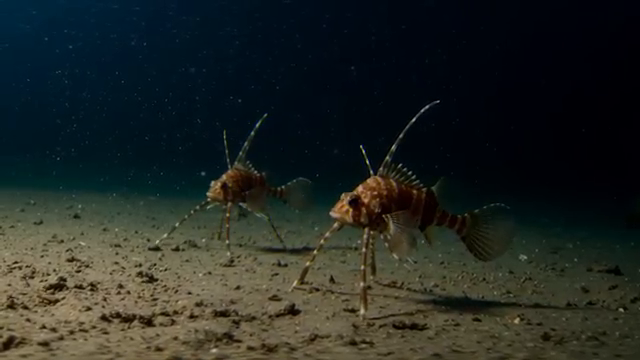
Sink slowly into the deepest point on Earth as we explore the Mariana Trench in a calm, long-form documentary for sleep. In this gentle journey to the bottom of the ocean, we visit the Challenger Deep, listen to mysterious deep-sea sounds, meet ghostly deep-sea creatures, drift past hydrothermal vents and “black smokers,” and disco

Detailed Summary of the Video: "Mariana Trench: Secrets of Earth’s Deepest Abyss"

1. Introduction & Physical Mechanics

Location & Structure: The Mariana Trench is a 2,500 km scar on the ocean floor [02:09].

Pressure Dynamics: Pressure increases by roughly 1 atmosphere every 10 meters [02:33]. At the deepest point (Challenger Deep, ~11,000 meters / 7 miles down), the pressure reaches over 1,100 times atmospheric pressure (~16,000 psi) [02:43].

SURFACE [ 1 ATM ] ============================= Air / Water Line

|

1,000 m [ 100 ATM ] | Midnight Zone

|

6,000 m [ 600 ATM ] | Hadal Zone Entry
Image for chunk 1

|

11,000 m [ 1,100 ATM ] v Challenger Deep Floor (Crushing Pressure)

2. Ocean Acoustics & Mysterious Sounds

Deep Sound Channel: Pressure and water density create a natural acoustic amplifier allowing low-frequency sounds to travel horizontally across thousands of kilometers [04:31].

Recorded Sounds:

Tectonic grinding and underwater earthquakes [04:58].

Man-made surface noise (ship propellers) and severe storms [05:14].

Distant whale calls [05:30].

Acoustic Anomalies:

The Bloop (1997): An ultra-low frequency sound originally suspected to be a massive sea creature, later confirmed to be catastrophic ice cracking in Antarctica [06:13

Image for chunk 2

].

Western Pacific Biotang (2014–2015): A 3-second 5-part call ranging from low foghorn groans to high metallic twangs, theorized to be a Minke whale call [07:03].

3. Human Exploration History

Year Explorers / Vessel Key Events & Findings

1960 Jacques Piccard & Don Walsh (Trieste) First manned descent [11:03]. At 30,000 ft, an outer plexiglass window cracked with a loud bang [12:04]. They reported seeing a flatfish [13:54], starting a long debate as vertebrates are believed unable to survive that pressure [15:09].

2012 James Cameron (DeepSea Challenger) Solo descent in a sleek torpedo-shaped submersible [16:54]. Discovered a plastic bag on the ocean floor 7 miles

Image for chunk 3

down [19:22].

4. Geology, Hydrothermal Vents & Chemistry

Subduction Zone: Formed where the older, denser Pacific Plate dives beneath the younger Philippine Plate [21:37].

Deep Earthquakes: Subduction causes deep quakes down to hundreds of kilometers [24:09].

Vent Systems:

Champagne Vent: Vents pure liquid carbon dioxide due to extreme pressure and cold temperatures [26:12].

Black Smokers: Superheated fluids up to 400°C (750°F) rich in sulfur and heavy metals spew into near-freezing seawater [27:57].

Chemosynthesis & Life's Origin: Ecosystems around vents rely on sulfur-utilizing bacteria rather than sunlight, leading to the Hydrothermal Vent Hypothesis for the ori

Image for chunk 4

gin of life on Earth [31:00].

5. Unique Ecosystem & Deep-Sea Life

The Hadal Zone: Begins around 6,000 meters deep [33:01]. Pressure disrupts cell membranes and proteins unless stabilized by organic compounds like piezolytes [36:22].

+-----------------------------------+

| HADAL ZONE ECOSYSTEM |

+-----------------------------------+

|

+-------------------------+-------------------------+

| |

[ GELATINOUS / GLASS ] [ BENTHIC ORGANISMS ]

- Mariana Snailfish (Apex, cartilage bone) [00:3

Image for chunk 5

5:38] - Xenophyophores (Giant single-celled amoebas) [00:44:45]

- Telescope Octopus (Transparent) [00:38:11] - Supergiant Amphipods (Alichella gigantea) [00:49:01]

- Glass Squid (Counter-illumination) [00:38:54]

- Dragonfish (Red light searchlights) [00:42:20]

Marine Snow: Organic debris falling from the surface acts as the primary energy base for deep-sea floor life [52:03].

Shadow Biosphere: Microbes buried deep within sediment living off chemical reactions and natural radioactive decay [55:11].

Whale Falls: Falling whale carcasses create temporary multi-decade hot spots of nutrient abundance [58:13].

6. Human Impact, Mining & Astrobiology

Human F

Image for chunk 6

ootprint: Plastic pollution, nuclear waste drums, heavy metal leakage, and potential Cold War military debris [01:03:00, 01:06:36].

Deep-Sea Mining: High demand for rare earth minerals found in polymetallic sulfide deposits around vents poses a huge environmental threat [01:09:40].

Astrobiology Connections: Serves as an analogue for subterranean oceans on frozen moons such as Europa and Enceladus [01:19:11].

Future Exploration: Transitioning from manned submersibles to autonomous, soft-bodied AI robotic swarms [01:23:11].

https://www.youtube.com/watch?v=1B_4zpIP0Io

Mariana Trench: Secrets of Earth’s Deepest Abyss | Documentary for Sleep

Silence of the Earth · 934K

No image available for chunk 7

Viewer Discussion & Comments

@SilenceoftheEarth
After receiving several comments about the visuals, we’d like to clarify:
@fajnavatra
Happy New Year, I'm watching from Ukraine, we have an alarm on January 1 at 4:12 am, I'm not asleep yet. I wish us victory in the new year and peace to all good people.
@fernrosey9413
Watching from the Philippines. Time: 12:19am. 😊 Exhausted from work and this calms my overstimulated soul hahah 😅
@ShopikoMorningStar
I am watching it from Germany, but I am from Kazakhstan 🇰🇿. Today is 03.05.2026, 23:22
@angieboolovesalot8581
Its currently 4:53 am est. Sleep doesnt come easy but theres something about these videos that just put my mind into a grove that makes it easier to try to sleep.
@amaristhewitchfromthewoods
It's currently 12:39 AM for me. I'm taking a very slow morning after a week of chaos at my university. A mix of good tea, a chocolate cake, fluffy blankets, my two lazy cats, and this fascinating video is a recipe for personal peace for me. Thank you for providing me with such an interesting video to aid my relaxation.
@sunilbshetty73
I am from India and I am listening to this at 12.16 am
@DanikaKH
I’m from British Columbia, Canada and it’s currently 12:41am PDT 🌲
@terrabella1988
I can't stay asleep if its too quiet. These are calm enough to help me not just get to sleep but stay asleep.
@jermainepargo2755
Watching from San Diego it's Currently 12:34am
@MichaelSchubert-u2v
I enjoy your videos. It’s 11:32pm. Thank you.
@marcc5435
It's amazing because we've only been to Challenger deep a couple of times pressure that would crush man made equipment the Trieste in 1960 and James Cameron went back but seeing the life at that depth was amazing I guess evolution creatures adapted
@munlkx
I tried this last night it really does work 😮
@elix901
The AI cat is out of the box already. I enjoy some of the content and it takes some imagination on the creatives part. It’s helped me with story boards.
@CARLMYONG
It’s strange how something so deep and unknown can feel this calming.